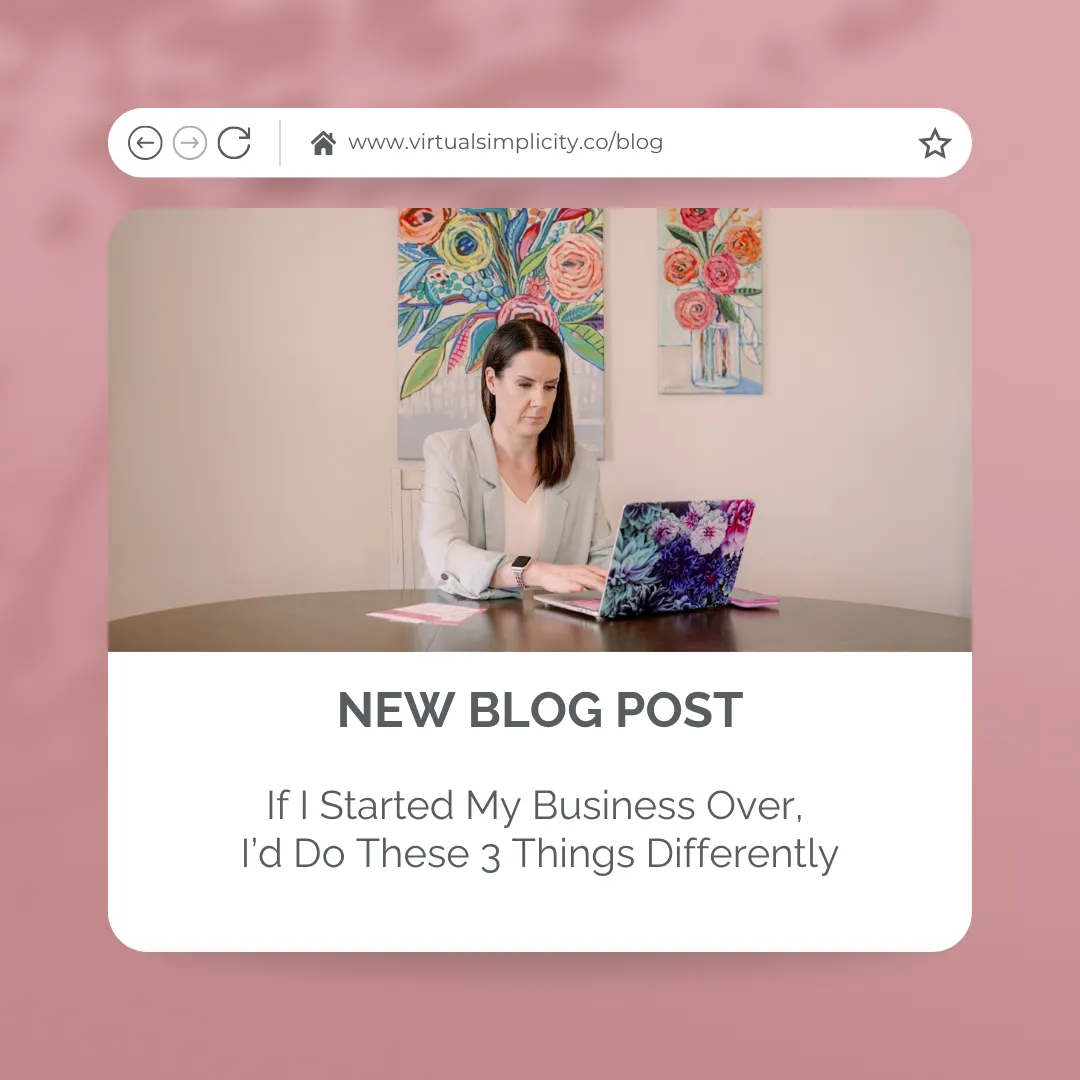
If I Started My Business Over, I’d Do These 3 Things Differently
If I had to start my business over from scratch, I would do a few things very differently.
Which is slightly terrifying to admit.
I didn’t set out to become an entrepreneur. I was a public school teacher for 15 years, and my business started as a side hustle to bring additional income into our family.
Then COVID happened.
Businesses moved online, demand for marketing support exploded, and my side hustle became a six-figure business within about a year.
It was exciting. It was also a crash course in entrepreneurship.
Looking back, three lessons stand out.
1. I Would Treat My Business Like a Business Sooner
For the first few years, I thought of my business as additional income rather than a company with real potential.
If I started again, I’d shift that mindset much sooner.
Even when your company is small, thinking like a business owner changes the questions you ask.
Where is the money going? What systems do I need? What am I working toward? What deserves my attention right now?
You don’t need a huge team or impressive revenue numbers to start operating like a CEO.
2. I Would Be Much More Selective About Where I Invested
This one may be slightly controversial.
I would spend less money on coaching programs and masterminds and put more of that budget directly into my company.
That doesn’t mean coaching isn’t valuable. I’ve had coaches, programs, and certifications that absolutely helped me.
But there was also a period when I kept buying the next program because that seemed like what entrepreneurs did.
Looking back, some of that money could have gone toward marketing, business development, better systems, or professional support.
There was definitely some spaghetti being thrown at the wall.
Now, I’d ask one question before making a significant investment:
What specific problem is this going to solve?
If I can’t answer that clearly, it probably doesn’t need my credit card.
3. I Would Get Serious About the Numbers Earlier
Making money and managing money are very different skills.
I learned that one the expensive way.
I wish I had stronger bookkeeping, accounting, tax planning, and financial guidance much earlier.
How much should I set aside for taxes? How should I pay myself? What should be reinvested? What can the company actually afford?
None of these questions are particularly exciting.
They are, however, considerably more exciting than an unexpected tax bill.
The Mistakes Were Part of the Education
Would I change some decisions if I could? Absolutely.
But I wouldn’t change becoming an entrepreneur.
Building this company gave me a sense of professional purpose and impact that I’m incredibly grateful for.
And every decision, including the questionable ones, taught me something.
I joke that I earned my street MBA in entrepreneurship. A lot of it came from simply doing the work, making decisions, seeing what happened, and adjusting.
You don’t need to get everything right.
You need to keep getting wiser about what you do next.
A Few Things I Know Now
Instead of another checklist of things you “should” be doing, here are a few questions I wish I had asked myself much earlier.
Can I clearly explain what I expect to get from this investment?
If the answer is fuzzy, pay attention. Whether it’s marketing, coaching, technology, or outside support, know what problem you’re trying to solve before spending the money.
Am I investing because my business needs it or because everyone else seems to be doing it?
Those are two very different things. Some of my least effective investments came from following what seemed popular rather than what my business actually needed.
Do I need more information or better implementation?
Another course, mastermind, or strategy isn’t always the answer. Sometimes you already know enough. What’s missing is a clear plan and consistent execution.
What would I tell a newer business owner about investing in growth?
Get curious before you get out the credit card. Know your numbers, understand the outcome you’re trying to create, and look for a clear connection between the investment and the problem you need to solve.
Before You Make Your Next Marketing Investment
If you’re tired of experimenting with marketing tactics and wondering which ones actually deserve your budget, time, and attention, we can help you sort through the noise.
Book a call with us and let’s identify what’s worth investing in now, what you can stop doing, and where your marketing dollars have the greatest opportunity to move the needle.
The goal isn’t to never make a bad investment. I certainly didn’t manage that.
It’s to make each decision a little smarter than the one before it.


